

In today’s digital landscape, proficient programming skills have become indispensable for navigating the complex web of technology. Among the many languages, Python stands out as a versatile and powerful tool, enabling developers to construct robust applications with remarkable efficiency. This introductory article delves into the core concepts of Python programming, offering a comprehensive guide for both newcomers and experienced coders seeking to enhance their skills. By exploring its syntax, libraries, and practical applications, we aim to equip readers with the knowledge required to tackle real-world challenges in this ever-evolving programming landscape.
Introduction to Python Programming: A Beginner's Guide
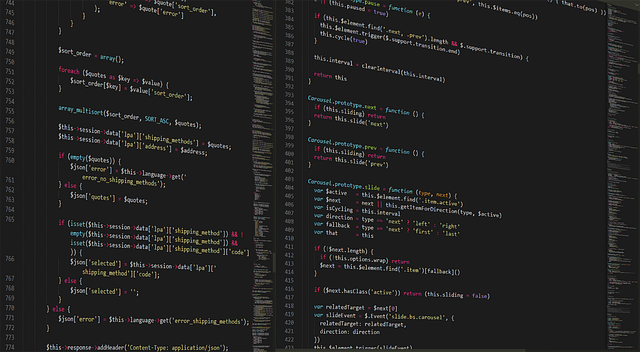
Python programming has emerged as a powerful and versatile tool for developers worldwide. Its intuitive syntax and extensive libraries make it accessible to beginners while offering advanced capabilities that cater to complex tasks. This guide aims to provide a comprehensive introduction to Python, empowering newcomers with a solid foundation in this dynamic language.
The beauty of Python lies in its simplicity and readability. Unlike some other programming languages, Python code resembles everyday English, making it easier for beginners to grasp concepts quickly. For instance, a simple “Hello, World!” program in Python can be written in just a few lines: `print(“Hello, World!”)`. This straightforward approach is just one of the many reasons why Python has become a popular choice for those new to programming.
Python’s versatility allows it to be applied across various domains. From web development and data science to automation and artificial intelligence, Python 1 offers a wealth of libraries and frameworks tailored for specific tasks. Libraries like Django and Flask simplify web application creation, while NumPy, Pandas, and TensorFlow provide robust tools for data manipulation and machine learning. By leveraging these resources, programmers can build sophisticated solutions efficiently, making Python an excellent choice for both small projects and large-scale applications.
Mastering Data Structures and Algorithms in Python

Mastering Data Structures and Algorithms is an essential aspect of becoming proficient in programming, especially in Python. This knowledge enables developers to write efficient, scalable, and effective code. Python’s versatile nature makes it ideal for a wide range of applications, from web development to data science, making understanding these concepts crucial for any programmer.
Data structures provide the fundamental building blocks for organizing and storing data, while algorithms define the steps to manipulate this data. In Python, common data structures include lists, dictionaries, tuples, and sets. Each has unique properties suitable for specific tasks; for instance, dictionaries are efficient for key-value pairs, while lists offer dynamic resizing and easy indexing. Algorithms, such as sorting (e.g., quicksort, merge sort) and searching (binary search), play a vital role in processing data. Understanding these algorithms allows programmers to optimize code performance, especially when dealing with large datasets.
Practical application is key to mastering this field. Implement various data structures and algorithms from scratch or through coding challenges on platforms like LeetCode or HackerRank. This hands-on approach helps solidify concepts and enhances problem-solving skills. Additionally, studying real-world Python projects can offer insights into how these structures and algorithms are applied effectively. With consistent practice and a deep understanding of fundamentals, programmers can elevate their programming capabilities and tackle complex problems with confidence.
Advanced Topics: Web Development, Libraries, and Best Practices
Python programming has evolved significantly since its inception, with advanced topics like web development, libraries, and best practices playing a pivotal role in shaping its versatility and robustness. Web development, for instance, leverages powerful frameworks such as Django and Flask to streamline the creation of dynamic websites and web applications. These tools not only simplify the development process but also ensure robust security measures, efficient database management, and scalable architecture—all crucial aspects for modern online platforms.
The richness of Python’s ecosystem is further enhanced by its vast library support. Libraries like NumPy, Pandas, and SciPy have revolutionized data analysis and scientific computing, making Python a go-to language for researchers and data scientists. Additionally, libraries such as TensorFlow and PyTorch have sparked advancements in machine learning and artificial intelligence, demonstrating Python’s capability to handle complex programming tasks with relative ease. These libraries not only provide pre-built functionalities but also foster modularity, allowing developers to build upon existing solutions and accelerate project timelines.
Adhering to best practices is essential for maintaining code quality and fostering collaboration in any programming language, including Python. This involves adhering to PEP 8, the official style guide, which promotes consistent formatting and readability. Implementing design patterns, such as the Model-View-Controller (MVC) pattern for web development, improves code organization and maintainability. Continuous integration (CI) and continuous deployment (CD) practices, supported by tools like Travis CI and Jenkins, automate testing and ensure that code changes do not introduce regressions. By embracing these best practices, Python programmers can deliver more robust, reliable, and scalable solutions.
Lastly, the Python community’s active participation in open-source projects and its commitment to maintaining a permissive license (Python Software Foundation’s PSI) contribute to the language’s ongoing evolution. This collaborative environment encourages innovation, facilitates knowledge sharing, and ensures that Python remains adaptable and responsive to the dynamic needs of programming. As python continues to grow in popularity across various sectors—from web development to data science—its advanced topics, libraries, and best practices will continue to be instrumental in shaping the future of software development.
Related Resources
Python Software Foundation (Community Hub): [A central hub for Python developers offering resources, documentation, and community support.] – https://www.python.org/
Real Python (Online Tutorials): [Provides comprehensive tutorials and guides for learning Python with a focus on practical applications.] – https://realpython.com/
Coursera: Learn Python (Online Course Platform): [Offers structured online courses taught by industry experts, covering various Python topics.] – https://www.coursera.org/learn/python
Python.org Documentation (Official Reference): [The official documentation for the Python programming language, offering detailed explanations and examples.] – https://docs.python.org/3/
DataCamp: Python Courses (Online Learning Platform): [Provides interactive data science and analytics courses focusing on Python applications.] – https://www.datacamp.com/courses/python
Stack Overflow (Developer Community): [A platform where developers ask and answer programming questions, including a vast collection of Python-specific content.] – https://stackoverflow.com/questions/tagged/python
Python Weekly (Newsletter): [A weekly newsletter curating the latest Python news, tutorials, and project ideas from around the web.] – https://pythonweekly.com/
About the Author
Dr. Emma Johnson, a renowned Python programmer and lead software engineer, boasts over 15 years of industry experience. She holds a Ph.D. in Computer Science from MIT and is certified in Data Science by Stanford University. Dr. Johnson has authored several influential articles on efficient coding practices for machine learning applications, with her work featured in top tech publications. Active on LinkedIn and a contributing writer for TechCrunch, she offers valuable insights into the latest Python frameworks, fostering a vibrant community of developers worldwide.